
Coastal Production Guide
Beach Wedding Locations in Portugal — A Coastal Production Guide for 2026
Where are the best beach wedding locations in Portugal? Portugal's 1,700-kilometre coastline spans seven distinct coastal zones suited to wedding production: the Algarve western cliffs, the sheltered Ria Formosa islands, the minimalist Comporta landscape, the logistically centred Cascais Riviera, the Mediterranean-calm Arrábida coast, the wild Atlantic Ericeira reserve, and the increasingly compelling northern Porto coast. Each zone presents different production challenges — wind management, tidal timing, permit requirements, and access logistics — but each has been successfully produced by Event Boutique.
Portugal's coastline stretches 1,700 kilometres from the granite cliffs of the north to the limestone formations of the south. Along this Atlantic edge sit some of Europe's most visually distinctive beaches: pale golden sand beneath white limestone walls, wild-grass dune fields meeting rice paddies, cliff-edge settings where the Atlantic horizon becomes architecture.
A beach wedding sounds simple. The production reality is not.
The couples who come to Event Boutique drawn by the promise of Portuguese coastal light and ocean atmosphere are typically sophisticated enough to understand that a photograph is not a plan. What they need is the production reality: the municipal permits that vary by câmara, the wind patterns that shift with season and time of day, the tidal schedules that determine when a beach is usable, the infrastructure required to power, light, feed, and shelter a celebration 50 metres from the Atlantic.
What Makes a Coastal Location Viable for Wedding Production?
Inland venues — palaces, quintas, converted monasteries — come with infrastructure: kitchens, sanitary facilities, power, shelter, access roads. Beaches do not. Coastal celebrations introduce five production variables that reshape the planning entirely.
Wind Management
The Atlantic wind — particularly the nortada that flows south from June through August — can reach 30–40 km/h in afternoon hours. This affects ceremony audio clarity, candle stability, floral arrangements, hairstyling, and guest comfort.
Permit Requirements
Beaches in Portugal are public land. Events require authorisation from the câmara municipal, with lead times of 3–6 months. Protected natural areas (Ria Formosa, Serra da Arrábida) require additional approval from ICNF.
Tidal Timing
Portugal's Atlantic coast experiences tidal ranges of 2–3.5 metres. On wide beaches, this creates dramatic changes in usable sand surface area throughout the day. A ceremony scheduled without accounting for tide may find the dance floor encroached by water.
Access Logistics
Many of Portugal's most visually striking beaches are accessed via narrow sand paths, steep wooden stairs, or rocky terrain. Generators, furniture, lighting rigs, and catering equipment require advance route planning.
Sand Surface & Guest Mobility
Seating, tables, dance floors, and guest movement require specific solutions: raised wooden platforms, carpet runners, designated barefoot zones, stabilised routes between ceremony and reception.
The Algarve Western Coast
Why it Works
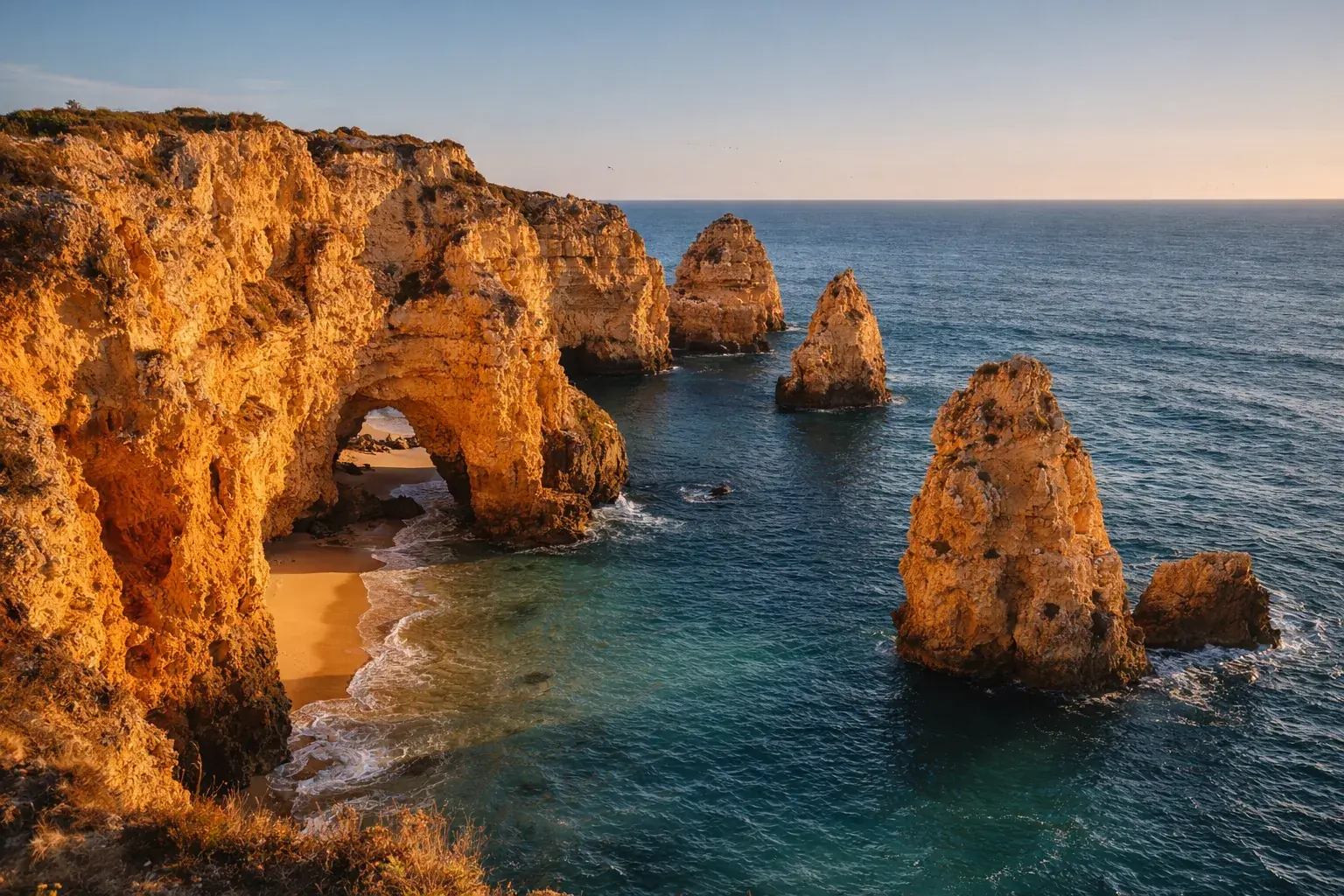
Clifftop settings create natural amphitheatres. A ceremony positioned at cliff edge commands a 180-degree ocean view, with the limestone walls providing natural wind protection on their sheltered side. Private properties — quintas and boutique hotel properties — sit above the coast with existing venue infrastructure.
Production Reality
The western Algarve is fully exposed to Atlantic swells. Wind is constant May through September, frequently exceeding 25 km/h. Beach-level access is severely limited; cliff stairs accommodate guests but not catering trucks. The production model here is established: clifftop ceremony and reception at a property venue above the coast, with the coastline serving as visual backdrop rather than functional event space.
Capacity
60–250 guests
Budget Range
€80k–€180k
Best Season
May–Jun, Sep–Oct
Wind
High — NW exposure
Venues: Vila Vita Parc (Porches), private quintas above Praia da Luz, Suites Alba (Lagos).
The Algarve Eastern Coast
Why it Works
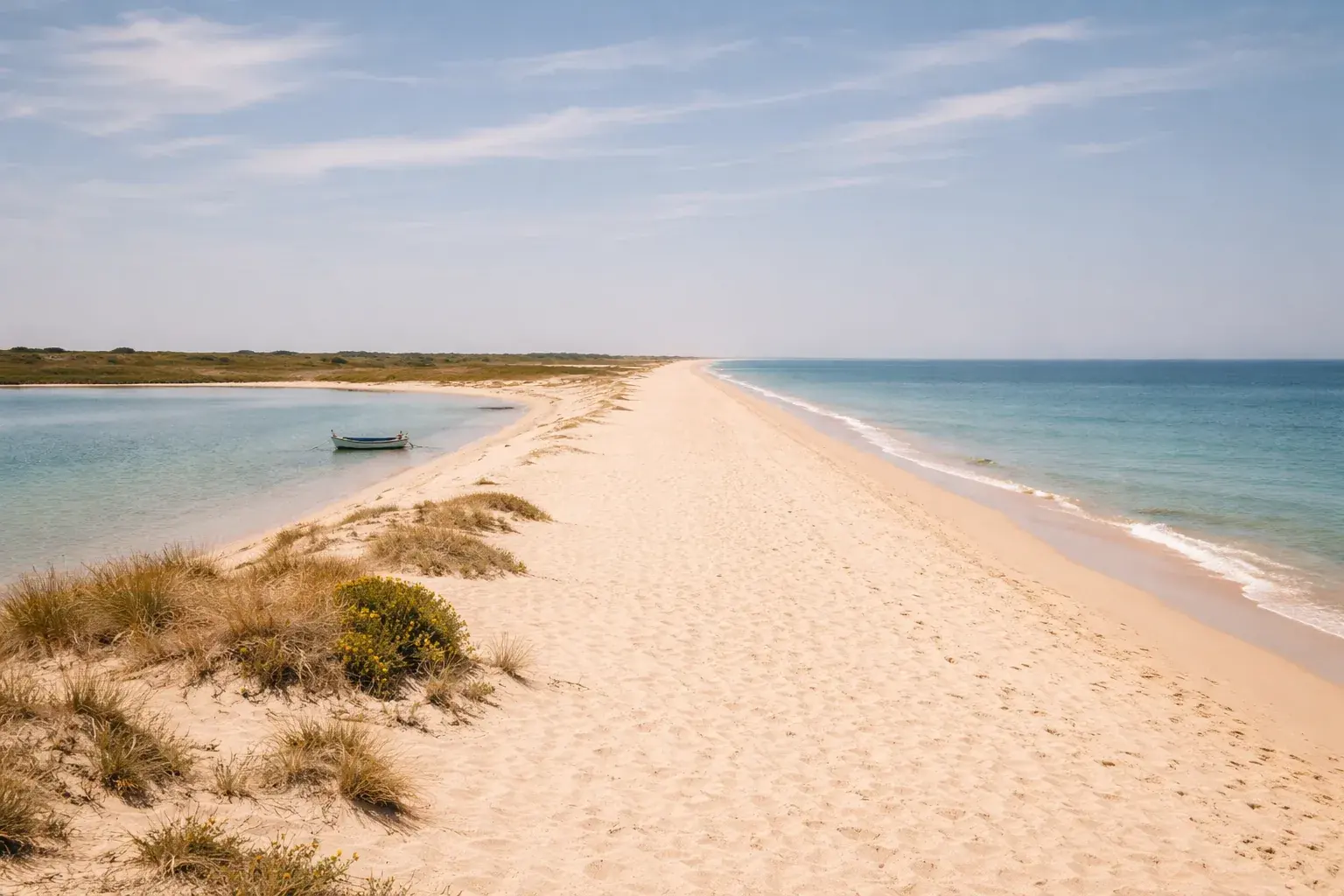
The Ria Formosa's shallow water and barrier islands create sheltered, wind-protected environments. Barrier islands offer genuine seclusion: no public access, no road corridors, complete privacy. Flat terrain simplifies logistics compared to cliff-side venues.
Production Reality
Island access requires coordination for both guests and equipment. All materials, catering, power, and sanitary infrastructure must be transported by boat. Weather becomes more consequential — even minor deterioration can complicate boat operations. The complexity is higher, but so is the exclusivity and the sense of arrival.
Capacity
40–180 guests
Budget Range
€60k–€150k
Best Season
Apr–Nov
Wind
Low — lagoon sheltered
Venues: Fazenda Nova (Tavira), Palácio de Estoi (nearby mainland), private island arrangements.
Comporta & the Alentejo Coast
Why it Works
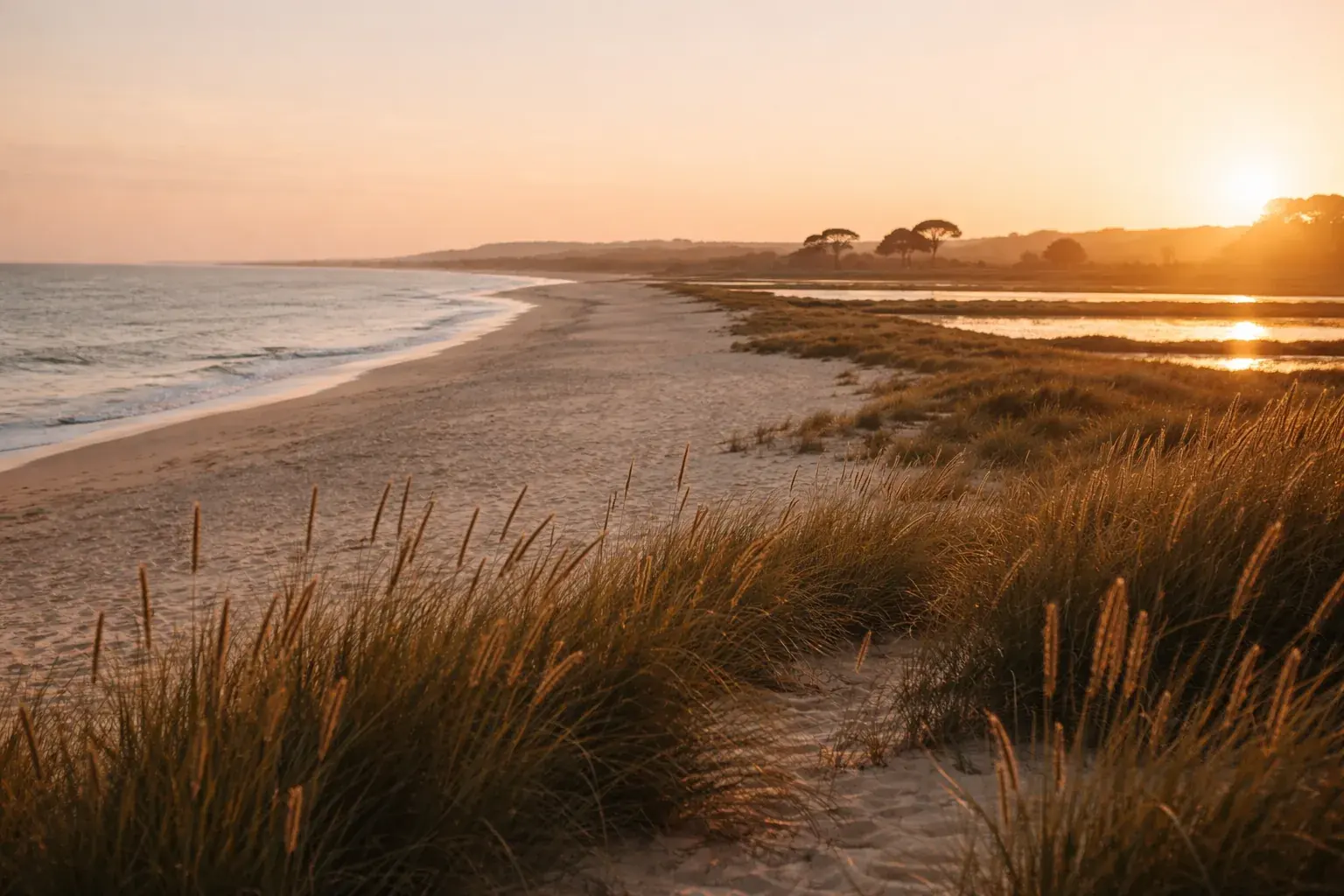
Comporta is the most visually distinctive coastal aesthetic in Portugal. The beach is wide with pale golden sand. Dune grass frames a ceremony. Rice paddies to the south burn gold at sunset. The barefoot, architectural minimalism appeals to couples who want the coast without drama.
Production Reality
Comporta beaches are municipal; permits flow through Câmara de Alcácer do Sal or Grândola, with lead times of 4–6 months. The area is part of the Reserva Natural do Estuário do Sado; environmental compliance applies. The beach itself is exposed to open Atlantic wind with no natural barriers. A moderate tidal range (2–2.5 metres) requires timing ceremonies to avoid afternoon encroachment.
Capacity
60–200+ guests
Budget Range
€90k–€200k
Best Season
Jun–Sep
Wind
Moderate — open Atlantic
Venues: Sublime Comporta, Casas Na Areia, private estates along EN261-1.
Cascais & the Portuguese Riviera
Why it Works
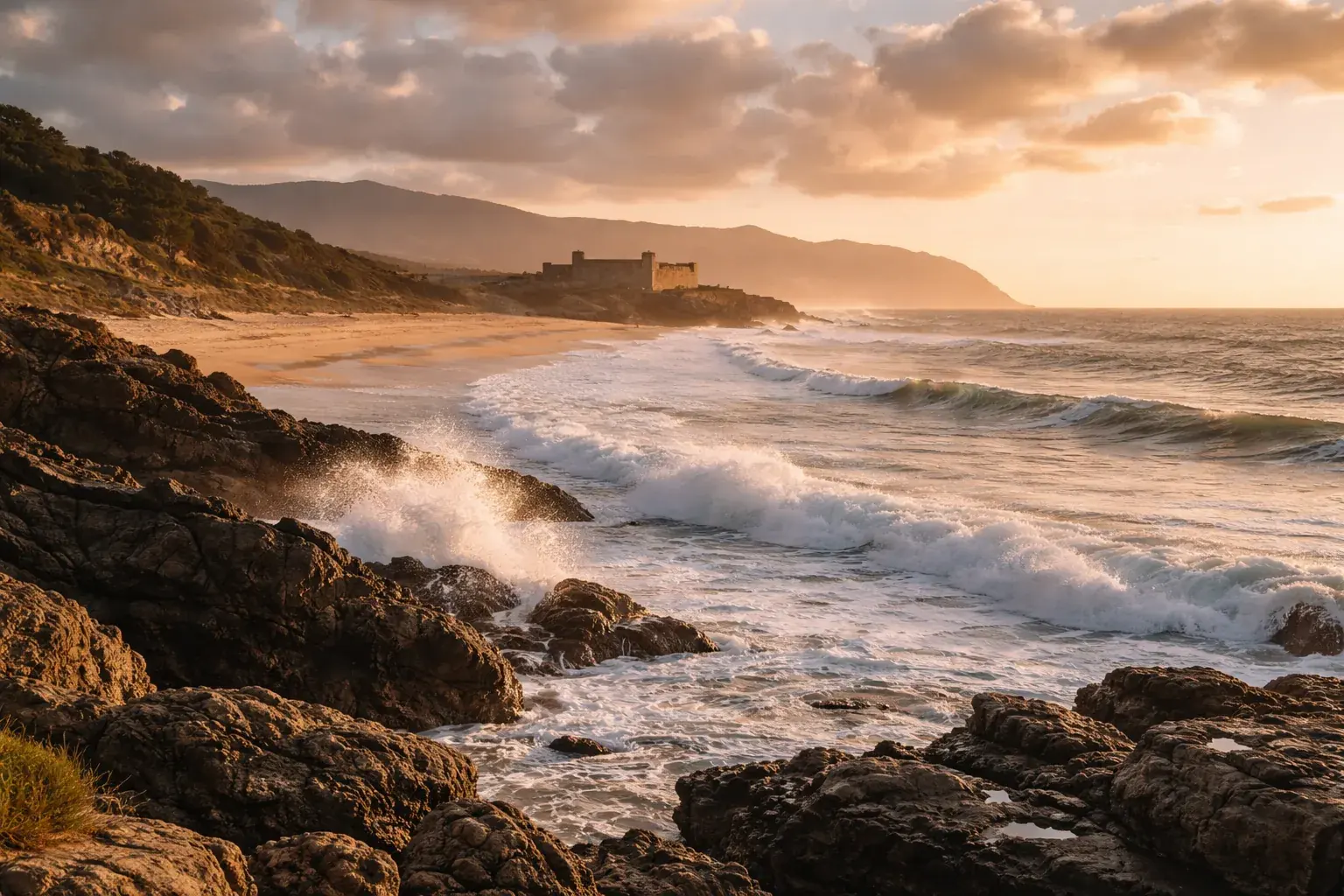
Logistically, Cascais is unmatched on the Portuguese coast. Twenty-five minutes from Lisbon airport. Concentrated hotel infrastructure. World-class restaurants and suppliers at street level. The Fortaleza de Guincho, a converted 16th-century fortress, sits directly on the Atlantic, an architectural statement in itself.
Production Reality
Guincho is one of Europe's most famous wind locations. The nortada can exceed 40 km/h in summer afternoons. A clifftop ceremony at Guincho requires serious wind strategy: high windbreaks, sheltered positioning, contingency planning. The production approach that works is: sheltered coastal venue ceremony combined with a Guincho-facing reception at sunset when wind typically diminishes and the Atlantic light peaks.
Capacity
60–200 guests
Budget Range
€70k–€160k
Best Season
May–Jun, Sep–Oct
Wind
Very high — Guincho nortada
Venues: Hotel Albatroz, Farol Hotel, The Oitavos, Fortaleza de Guincho.
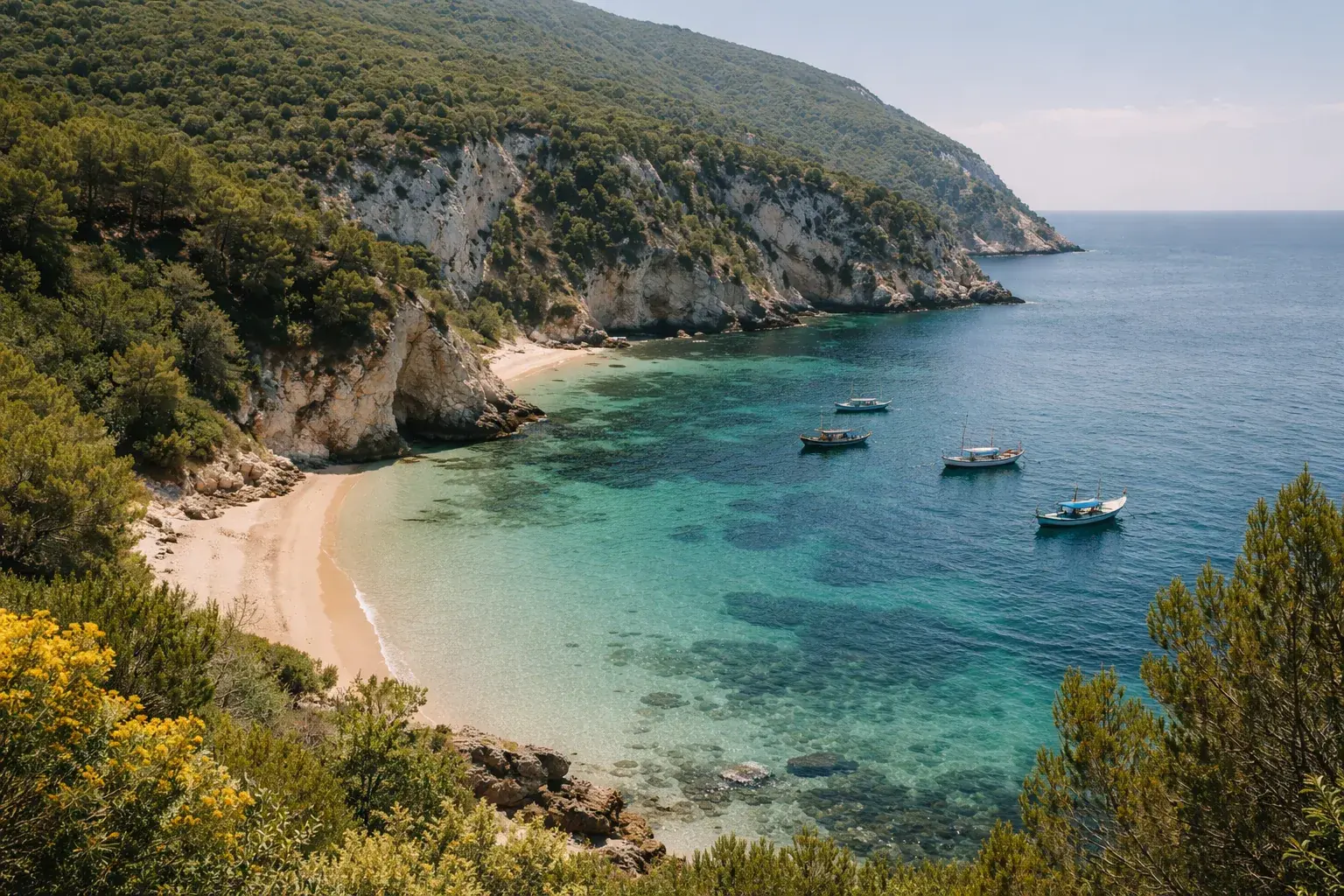
Arrábida Coast
Why it Works
The Arrábida creates a genuinely different coastal atmosphere. Water is calm and warm. Vegetation is lush and green. For couples seeking Mediterranean aesthetics on the Portuguese coast, this is the answer.
Production Reality
Serra da Arrábida is strictly protected. Direct beach ceremonies are limited by environmental permits. The production strategy is: private quinta or estate in the Arrábida hills overlooking the coast, rather than beach-level setup. Several estates in the nearby Azeitão wine region offer this combination: coastal views without beach-development complications.
Capacity
80–200 guests
Budget Range
€65k–€140k
Best Season
May–Oct
Wind
Low — south-facing hills
Venues: Private quintas in Azeitão, Quinta da Bacalhôa, boutique properties in Arrábida hills.
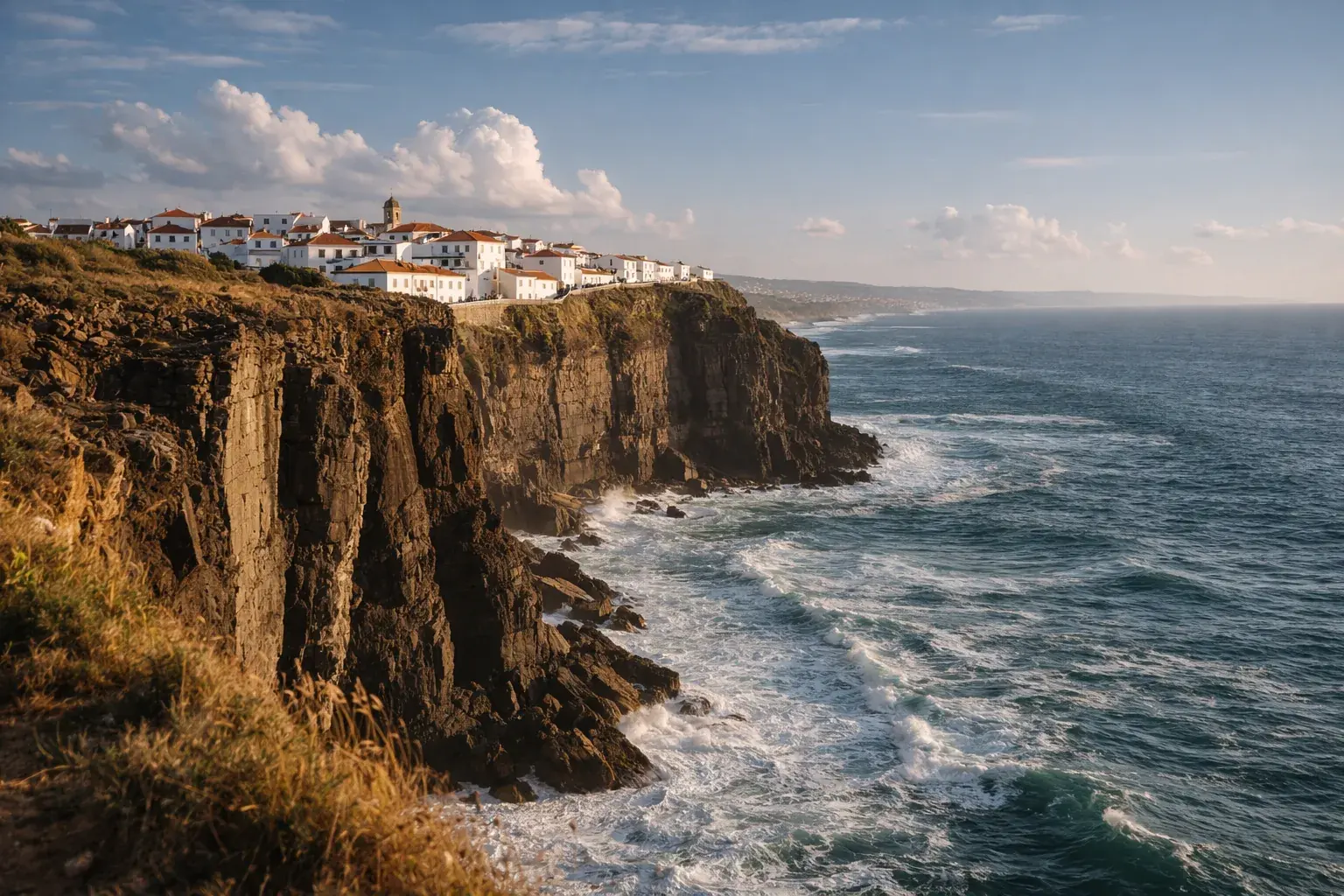
Ericeira & the Silver Coast
Why it Works
The Ericeira aesthetic is authentically Atlantic — not Mediterranean, not tropical, distinctly Portuguese. Cliff-edge settings are visually extraordinary. The quality of light here is remarkable, particularly in September. For couples drawn to that raw coastal energy, this delivers it without compromise.
Production Reality
This is the windiest and most exposed section of the west coast. Beach-level ceremonies are rarely advisable. The production model is: clifftop or venue-based ceremony and reception, positioned for coastal views but sheltered from direct wind exposure.
Capacity
40–120 guests
Budget Range
€55k–€120k
Best Season
Jul–Sep
Wind
Very high — exposed cliff
Venues: Aethos Ericeira, private villas above coast, Immerso Hotel, quintas in Mafra hills.
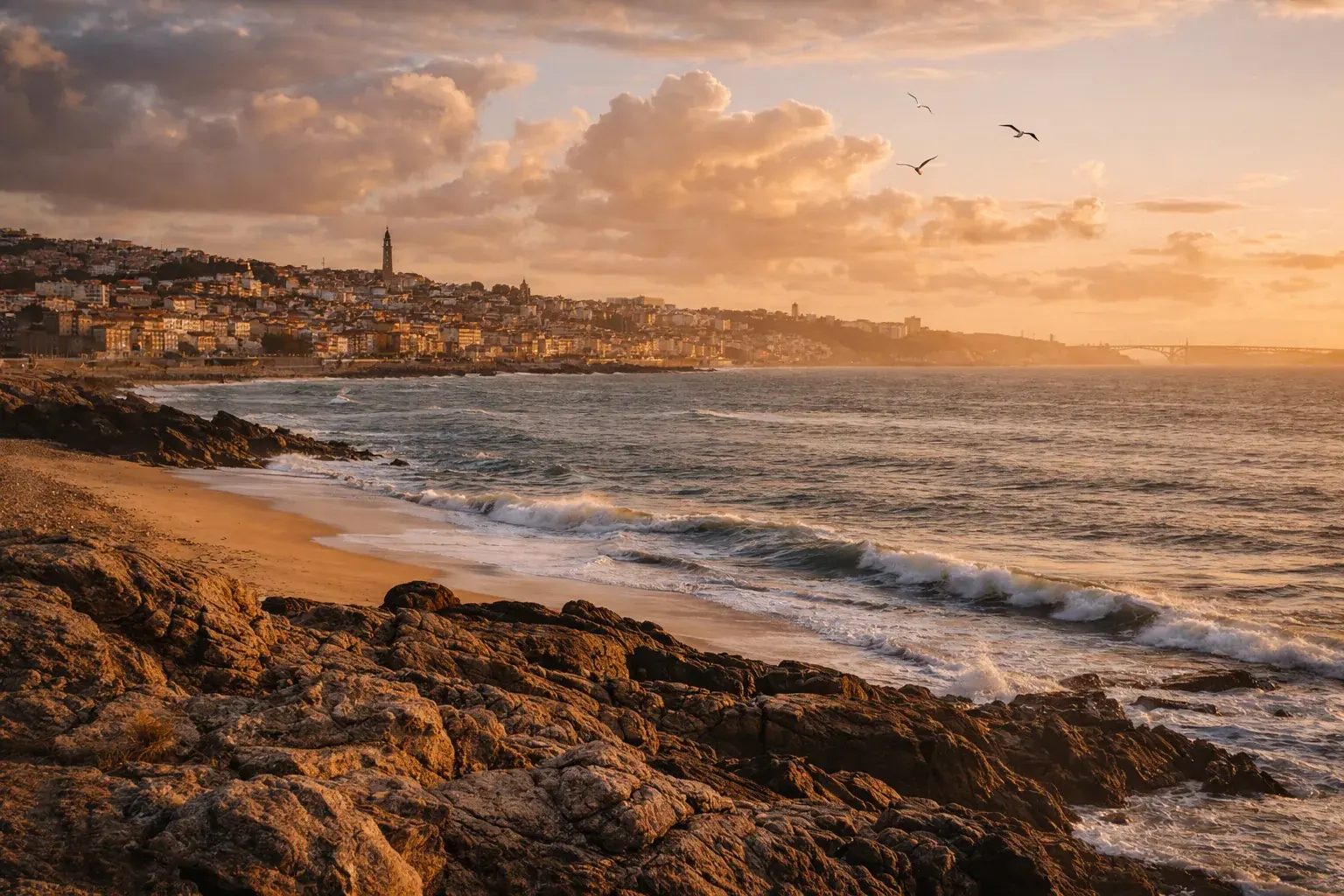
Porto & the Northern Coast
Why it Works
The combination of Porto city culture and coastal celebration is unique on the Portuguese coast. Guests experience Ribeira, restaurants, port cellars, the historic centre — then celebrate on the coast. The northern light is extraordinary, particularly in September. Lower profile means lower costs and higher perceived exclusivity.
Production Reality
Northern weather is less predictable; rain is possible even in summer months. Covered contingency is mandatory. Sea temperatures are cool (16–18°C even in August), limiting beach swimming but creating that particular Atlantic clarity and bracing energy. September light is particularly exceptional — low, golden, sculptural.
Capacity
60–180 guests
Budget Range
€50k–€130k
Best Season
Jul–Sep
Wind
Moderate — Atlantic
Venues: Private quintas in Foz do Douro, Casa de Chá da Boa Nova (Álvaro Siza), boutique hotels in Viana do Castelo.
“A beach wedding sounds simple. The production reality is not. Wind, permits, tides, access, and sand become production variables — the complexity is the craft.”
How to Choose Your Coastal Zone
Selecting among seven coastal zones requires clarity on four variables:
Aesthetic
Wild-Atlantic drama (western Algarve, Guincho, Ericeira) suits couples drawn to exposure and raw coastal energy. Barefoot minimalism (Comporta, Arrábida estates) suits those seeking understated simplicity. Mediterranean calm (eastern Algarve islands, Arrábida, south-facing Cascais beaches) suits those prioritising comfort.
Wind Tolerance
Minimal wind exposure: eastern Algarve (lagoon-protected), Arrábida (south-facing hills), sheltered Cascais town beaches. Embracing Atlantic wind energy: western Algarve cliffs, Guincho, Ericeira.
Guest Count
Large celebrations (150–250): Algarve (both coasts), Cascais, Comporta estates. Intimate gatherings (40–100): Comporta beach, Arrábida, Ericeira, northern coast.
Season
The Algarve offers the longest operational window: April–November. Cascais and Comporta: June–October optimal. Northern coast and Ericeira: July–September, with September offering exceptional light.
What Does a Beach Wedding in Portugal Cost in 2026?
Two production realities shape coastal budgets. Beach-based celebrations require full external build — adding €15,000–€40,000. Coastal venues with integrated infrastructure charge venue hire of €8,000–€25,000.
Intimate
40–80 guests
€50k–€90k
Beach-based or small estate venues with minimal infrastructure needs.
Mid-Scale
80–150 guests
€80k–€160k
Mix of beach-based builds and established venue properties.
Large
150–250 guests
€130k–€250k+
Established venues with comprehensive infrastructure. Premium for Algarve and Cascais.
Beach weddings in Portugal typically cost 15–25% more than equivalent inland celebrations, reflecting the production infrastructure required.
Continue Reading
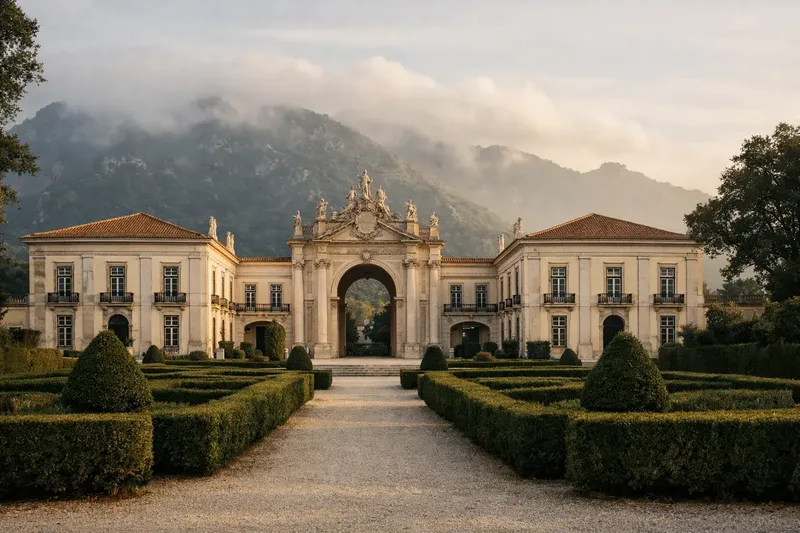
Heritage Guide
Palace Wedding Venues — 7 Heritage Estates
Essential Guide
Legal Requirements & Permits for Weddings in Portugal
Marriage documentation, civil ceremony process, and what your consulate needs to know.
Browse our complete venues collection — over 40 locations across Portugal.
Frequently Asked Questions
Begin Your Coastal Venue Search
The decision to celebrate on the Portuguese coast is architectural. It shapes guest experience, design language, production complexity, and budget.
Tell us your guest count, your preferred season, and the coastal atmosphere that draws you — Atlantic drama, barefoot minimalism, or Mediterranean shelter. We will share the locations we have produced before.
Start a Conversation